

Managing the Rain: How I Think About Growth and Development in Platte County
I have said it many times, at doors and in forums across this county: growth and development in Platte County are inevitable. They are coming, the same way the rain is coming. You cannot vote against the rain. You cannot pass an ordinance to stop it. And you would be a fool to stand in the yard shaking your fist at the clouds.
But here is what you can do. You can build the gutters, the culverts, and the drainage so that when the rain comes, it goes where it should — nourishing the community where it needs nourishment, a net benefit instead of a flood.
That is what leadership on development looks like. Not stopping the rain. Not praying for more of it. Managing it.
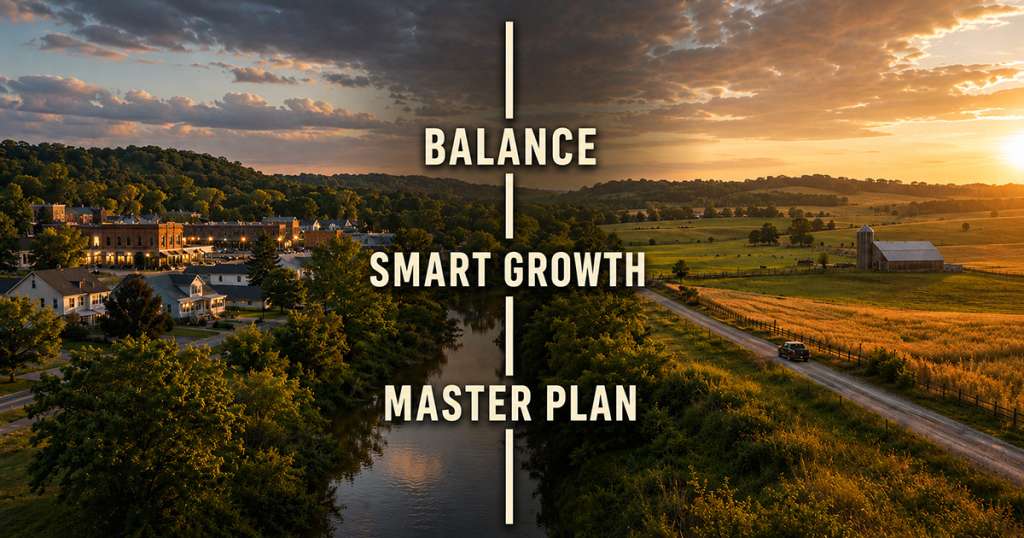
Here is why the managing matters so much. Platte County is a unique blend — established neighborhoods, multifamily housing, commercial corridors, and working farmland, all sharing one county. It is a mix you simply do not find in the rest of the Kansas City area. People do not end up here by accident. We live here because it feels different. Because it feels special. And what makes it feel that way is that very blend. So the whole point of managing our growth well comes down to one thing: making sure that fifty years from now, the people who call Platte County home can still say exactly the same thing.
The job of managing the rain
Elected officials should not be cheerleaders for growth, and they should not be gatekeepers against it either. They are supposed to be the “managers of the rain.”
In practice, that means empowering our Planning and Zoning Commission to do the job we created it to do. Our Planning and Zoning Commission should be the foremost experts on our master plan — full stop. They should be the ones working with developers on behalf of the citizenry. Every proposal should pass two tests: consistency with the master plan, and consistency with the sentiment of the community as it stands today. The master plan is not a dusty binder on a shelf. It is a promise the community made to itself, and the people we trust to apply it should know it cold.
Growth and development are an essential part of Platte County’s future. Smart growth is the key to it.
What smart growth looks like
I welcome economic growth in Platte County, and I welcome balanced partnerships between our municipalities and developers — partnerships where the community comes out ahead in the end. I welcome healthy discussion about development and about where our future is heading.
And I will be persistent about one thing: every development decision must weigh the community’s desire for how things ought to be. Not brushed aside. Not managed around. Weighed. Too often, our residents feel like officials ram projects down their throats, and that feeling is corrosive — it turns neighbors who might have been partners into opponents.
Sometimes we will get it right. Sometimes we will get it wrong. But the one thing we absolutely have to do, every time, is stay willing to engage each other. That means an ongoing conversation among community stakeholders, the development community, our real estate professionals, and the community that stays behind to manage and inherit both the benefits and the costs.
The master plan is the community’s plan
Platte County has a master plan. It did not fall out of the sky, and developers did not write it. It was built through a public planning process shaped by citizen input — with public input, public hearings, and public intent. It is their written statement of what they want this county to become. That makes it more than a planning document. It is a promise.
That is why, in my opinion, the job of our Planning and Zoning Commission (P&Z) is clear: they should be the foremost experts on that master plan, and they should be the ones guiding developers through adhering to it — not standing by while a developer disregards it as an inconvenience. When a proposal comes forward, the first question should always be the same: is this consistent with the plan the citizens already agreed to?
But a master plan is not frozen in time, either. We have to weigh it against the wishes of the citizenry as they stand today. A plan written years ago and the community living here right now both get a voice. When P&Z holds both of those in hand — the written plan and the current will of the people — developers get a fair, predictable process, and citizens get a government that keeps its word.
Growth people don’t have to swallow
Often, our citizens feel like officials are ramming projects forward without listening. I am aware that is how many business owners in Parkville feel right now about a proposed project in their own backyard. Many of them have contacted me and shared that they feel like their concerns have been disregarded despite a majority of them opposing it. I have great empathy for those business owners.
I have also seen what it looks like when it’s done right. Recently, I was made aware of a developer taking the time to make the adjustments the community is calling for — modifying the plans instead of disregarding the people who have to live with them. I appreciate that, and I want to say so publicly, because that willingness to listen is exactly what this county should expect as the standard, not celebrate as the exception.
Here is the truth about listening: it is not a courtesy, and it is not a delay. It is the difference between growth a community comes to own and growth a community comes to resent. Part of getting growth right is making sure the community that has to live with it finds it palatable — and the only way to know what people can live with is to ask them, hear them, and mean it.
About that “anti-growth” label
Some in the development community see me as a threat. Over the years, people have tried to paint me as anti-growth or anti-development because of the stance I took on the reallocation of public funds for a particular development.
Let me say this plainly: that fight was never about development. It was about transparency and the use of taxpayer funds. The public officials involved at the time were not being open about their discussions or about what they had planned, and I believed the citizens footing the bill deserved to know. That is not an anti-development position. That is a pro-taxpayer and pro-transparency position.
A second look at creekside
In 2018, I was personally outspoken about the Creekside development — not because of the project itself, but because of what I saw as a lack of transparency by the city officials pushing it forward and claiming that there was zero taxpayer impact.
I want to be clear about something, looking back, and having the benefit of time to review things: Creekside has turned out to be a wonderful addition to our community. My neighbors and my own family frequent it quite a bit, and we find the services there to be a real benefit. And the developer, Brian Mertz, has proven to be someone who works with the community to provide the services he believes we need. I appreciate his willingness to lean in. I have not always agreed with Brian on things, but as I have gotten to know him better, I see him for what he is: a true business person trying to do what he thinks is best.
That is not to say I agree with the tax incentives the city awarded for the project. I do not. But that is no fault of Mr. Mertz. He is a business person, and he worked with the city officials who offered those incentives. The fault lies in the incentives themselves — and most importantly in the process that awards them. That is what deserves the scrutiny. Not the man willing to take the risk.
Risk, respect, and magic beans
And let’s talk about that risk, because it deserves acknowledgment. The entrepreneurs looking to develop and redevelop in our community are looking to help us grow, and they take much of that risk themselves. We need to recognize and respect that.
But respect and pragmatism have to travel together. I have said it before and I will say it again: I do not support using public funds for private interests. Platte County can no longer afford to constantly subsidize private ventures. We have real problems with our core infrastructure that need attention, and every dollar has a job to do. So any time someone asks us to invest public money in a private undertaking, we need to be very, very sober about one question. Is this truly a good investment for the citizens of Platte County — or is it a handful of magic beans?
Show Me
There will always be those who argue that every development pays for itself — that it will always increase tax revenues, so the incentives cost us nothing. To those folks, I would offer a friendly reminder: this is Missouri. The Show-Me State. Bring the numbers. Open the books. Make the case in public, in front of the people paying the bills, and be prepared for some respectful scrutiny.
The generational test
The rain is coming either way. We don’t get a vote on that. What we do get a vote on is how Platte County meets it — with a plan, with discipline, and with leaders who listen — so that what arrives here nourishes this county instead of washing over it.
So here is the test I will put to every major decision: fifty, sixty, even seventy-five years from now, will our kids and grandkids look at the Platte County we handed them and still recognize what makes this place home? If the honest answer is no, then it is the wrong project — or the right project at the wrong time.
Because the developments we approve today are not for us. We are just the ones deciding. The people who will live with those decisions are not yet in the room. They cannot speak at the public hearing. They cannot vote in this election. But they will inherit every choice we make — the benefits and the costs alike.
Manage the rain well, and fifty years from now this county is still growing, still solvent, and still home. That is the choice in front of us. I know where I stand.

Jason Maki
Candidate for Platte County Presiding Commissioner
Jason Maki is a husband, father, small business owner, youth football coach, and Missouri Sunshine Coalition member. He is a candidate for Platte County Presiding Commissioner.
Learn more at Maki4Platte.com or contribute at secure.anedot.com/maki4platte/contribute.
Paid for by Jason Maki for Platte County, Leah Maki, Treasurer.